The UNEP Copenhagen Climate Centre has launched the Article 6 Pipeline, a web-based platform designed to support effective implementation of Article 6 and advance climate ambition and sustainable development.
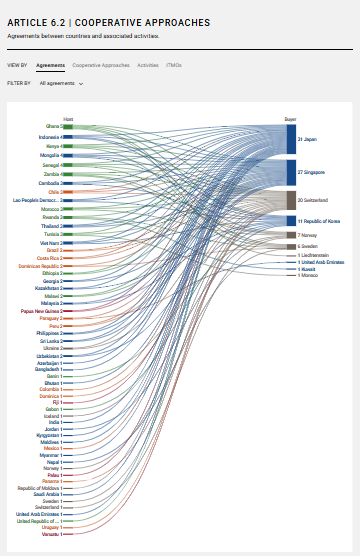
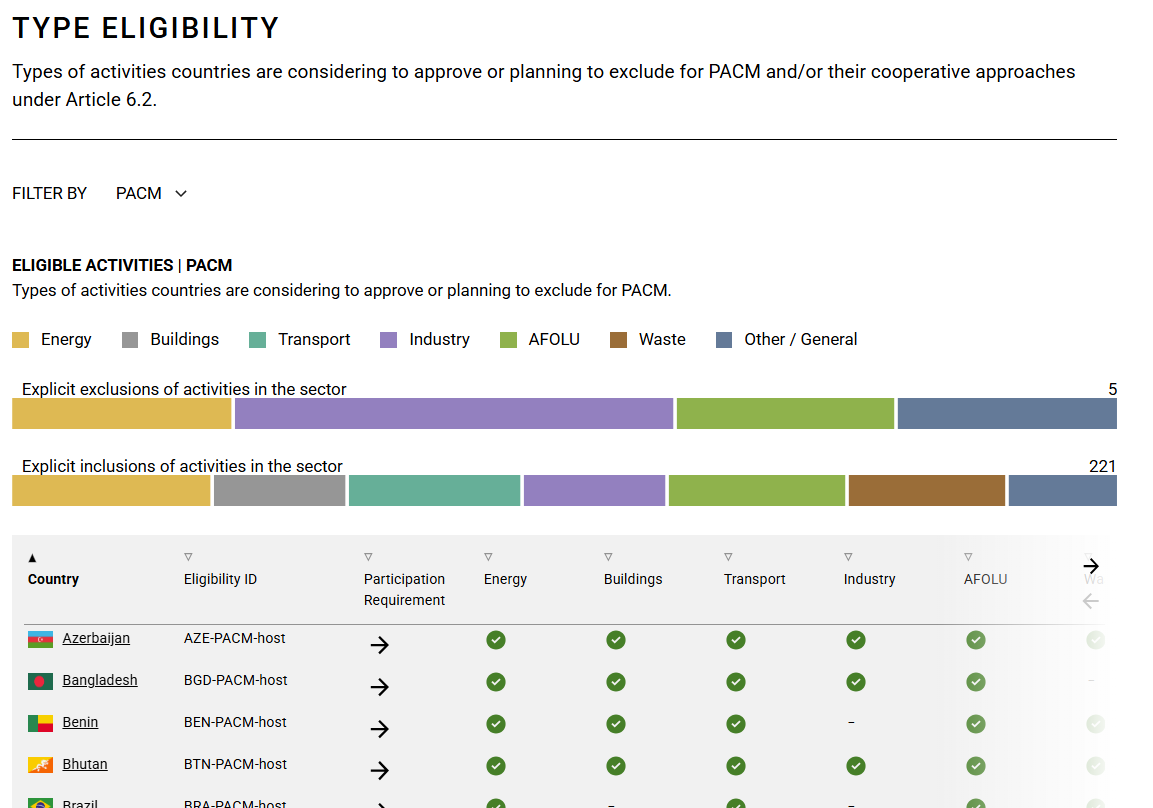
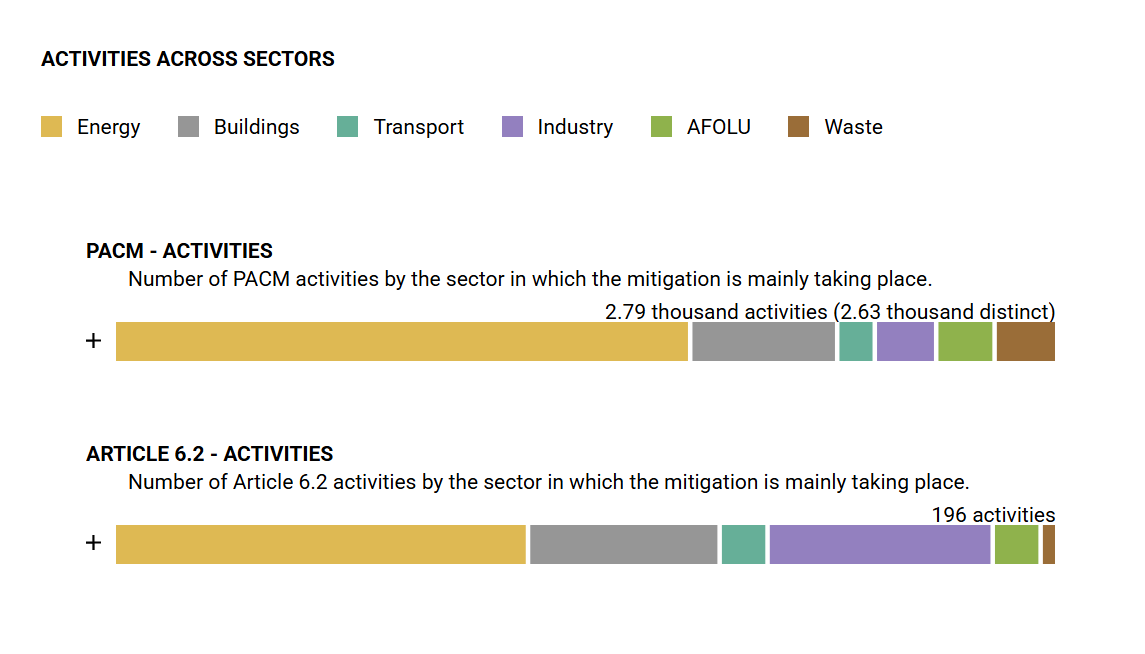
The new Article 6 Pipeline offers interactive maps, dashboards, and data to explore activities by country, region, sectors, and mitigation solutions.
Visit the new Article 6 Pipeline here.
Opening the launch, Martin Krause, Director of the Climate Change Division at UNEP, highlighted the findings of UNEP’s 2025 Emissions Gap Report, that a significant gap remains between current national commitments and the reductions needed to limit global warming to 1.5°C. Adding that high-integrity carbon markets can help close this gap by enabling cost-effective mitigation, supporting technology transfer and mobilizing finance -provided that trust, integrity and credibility are ensured.
“With today’s launch of the UNEP Copenhagen Climate Centre’s Article 6 Pipeline, UNEP shows its commitment to facilitate high-integrity carbon markets that help close the emissions gap, uphold human rights and deliver on the Sustainable Development Goals,” Martin Krause said.
Developed in collaboration with the UNFCCC Secretariat, the Article 6 Pipeline builds on long-standing partnerships within the UN system to support countries in turning climate commitments into action.
Perumal Arumugam, Manager for Markets and Non-Markets and Stakeholder Interaction Subdivision, in the Mitigation Division at the UNFCCC, emphasized this collaboration and the importance of equipping countries with the tools, information and capacity needed to implement Article 6.
“Article 6 has the potential to support increased ambition, mobilize investment, accelerate mitigation, and contribute to adaptation and sustainable development,” Perumal Arumugam said.
Article 6 Pipeline: Transparent and accessible data
As countries move from rule-setting to implementation of Article 6, demand for transparent and accessible data is increasing. More than 150 countries have indicated in their NDC plans to engage in voluntary cooperation, underscoring the need for robust data and analysis.
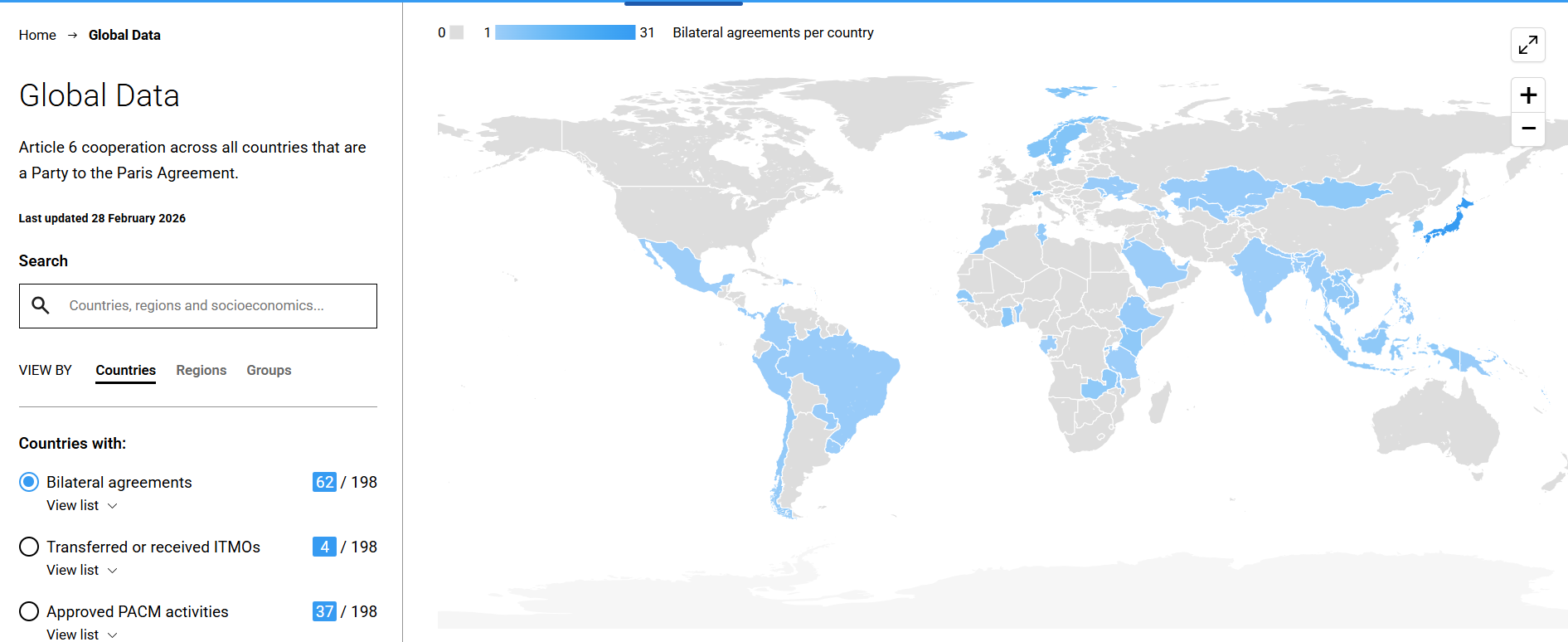
The Article 6 Pipeline brings together information on cooperative approaches, bilateral agreements and activities under the Paris Agreement Crediting Mechanism (PACM) into a structured and user-friendly dataset for governments, project developers, investors and other stakeholders.
Users can explore trends through interactive features and filters. For example, a country seeking to acquire internationally transferred mitigation outcomes (ITMOs) can identify relevant activities within a specific sector and assess their planned emission reductions/removals.
A data download function, allowing users to extract selected data or entire datasets, is planned as a future enhancement to the platform’s functionalities.
Sustainable development insights
A dedicated webpage allows users to view information from the perspective of the market-based cooperation to better understand emerging patterns.
The platform also provides insights into sustainable development goals (SDGS) at national level and impacts at activity level. For PACM, it compiles data from the mandatory Article 6.4 Sustainable Development Tool, enabling users to filter activities by positive and negative impacts and by their contribution to specific SDGs .
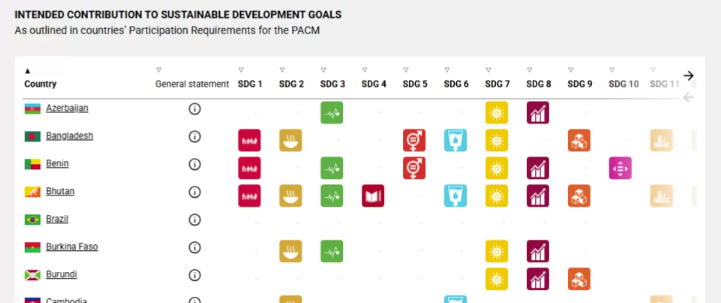
For Article 6.2, the platform presents information drawn directly from Parties’ Initial Reports, including how cooperative approaches address environmental, social and economic risks and impacts and align with national priorities. Users can also access links to the original reports, supporting transparency and traceability.
By integrating policy-level and activity-level data with national participation, the platform enables analysis of geographic and sectoral trends, helping to close knowledge gaps and support capacity building, particularly in developing countries.
Data covering the carbon market cycle
The Article 6 Pipeline contributes to these objectives by offering neutral, authoritative and transparent data across the carbon market cycle—from generation to transfer and use of mitigation outcomes.
The platform builds on UNEP Copenhagen Climate Centre’s experience tracking mitigation CDM activities since the Kyoto Protocol through the CDM Pipeline, which was also developed by the Centre since 2002.
With the launch of the Article 6 Pipeline, UNEP Copenhagen Climate Centre reinforces its commitment to supporting countries with science-based, open and trusted data to advance Paris-aligned carbon markets and help close the global emissions gap.
The development of the Article 6 Pipeline is supported by the Ministry of Foreign Affairs of Denmark (Danida).