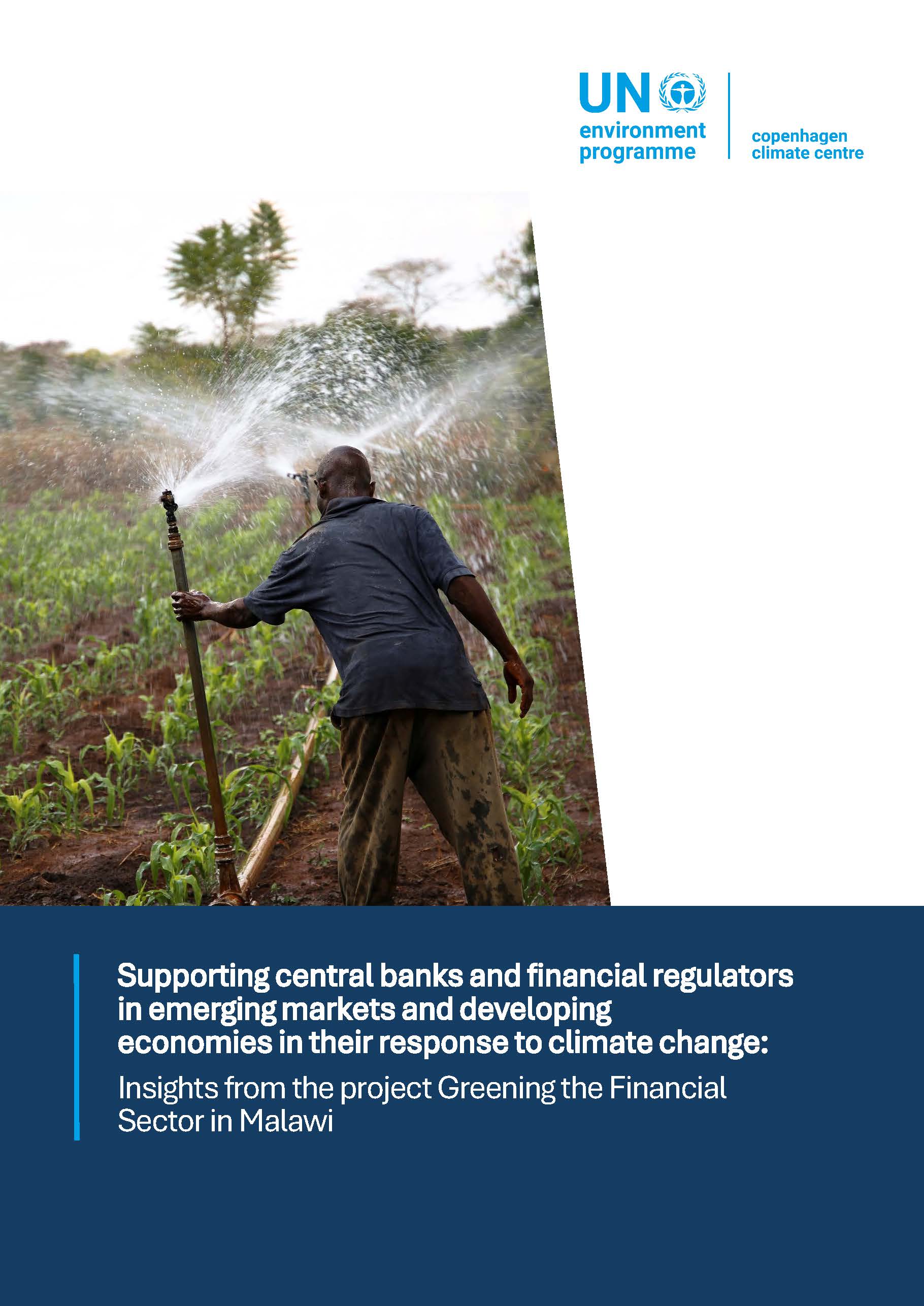
A new UNEP Copenhagen Climate Centre paper examines the challenges facing central banks and financial regulators in emerging markets and developing countries as they begin integrating climate change into their operations. It shows how climate change is increasingly recognized as a material risk to price stability and financial stability, while also highlighting the structural and resource constraints that are limiting the range of tools available to central banks and financial regulators to address these.
Drawing on the experiences of the Reserve Bank of Malawi, who – under the Greening the Financial Sector in Malawi project – began exploring how they could respond to climate change, the paper distils lessons that are relevant for authorities in developing countries at similar stages of the journey.
Institutionalizing climate change
The experience of the Reserve Bank of Malawi underscores that limited financial market depth, capacity constraints and competing policy priorities require a phased and context-specific approach. Rather than adopting complex tools prematurely, the paper emphasizes the importance of first institutionalizing climate change within organizational structures and building internal expertise over time.
Key insights from the paper include:
- Central banks and financial regulators are increasingly viewing climate change as a material risk to their core mandates of price and financial stability.
- Resource and capacity constraints make it challenging for authorities in emerging markets and developing countries to develop the infrastructure and skills needed to address climate risks, while underdeveloped financial markets limit the range of tools at their disposal.
- A phased approach is critical to avoid unintended trade-offs with their core policy objectives, with the integration of climate change into the central bank or financial regulator’s organizational structure representing a foundational first step.
- Peer-learning networks and free, open-access training resources offer cost-effective ways to build staff capacity.
- Effective climate action by central banks and financial regulators requires close collaboration with ministries of finance and environment, as many of the tools available to central banks and financial regulators are only feasible if supported by policy and regulatory frameworks developed by the national government.
From analysis to action in Malawi
The paper builds on UNEP Copenhagen Climate Centre’s collaboration with the Reserve Bank of Malawi under the Greening the Financial Sector in Malawi project, funded through the NDC Partnership’s Readiness Support for Greening Central Banks. The project supported the Reserve Bank to explore its role in reducing financial sector exposure to physical and transition climate risks, while encouraging the flow of finance toward low-carbon and climate-resilient activities.
A key output was a feasibility study and internal roadmap outlining near-, medium- and long-term actions to green Malawi’s financial sector. Since the study’s launch in December 2024, the Reserve Bank of Malawi has already begun implementing several recommendations, including:
- Establishing a Climate Change Centre within the Bank,
- engaging in structured knowledge-sharing with peer institutions, and
- initiating work on a national green taxonomy with support from a multilateral development partner.
Together, the publication and the outputs of the Greening the Financial Sector in Malawi project offer central banks and financial regulators seeking to strengthen climate resilience while safeguarding financial stability practical guidance on how to proceed.