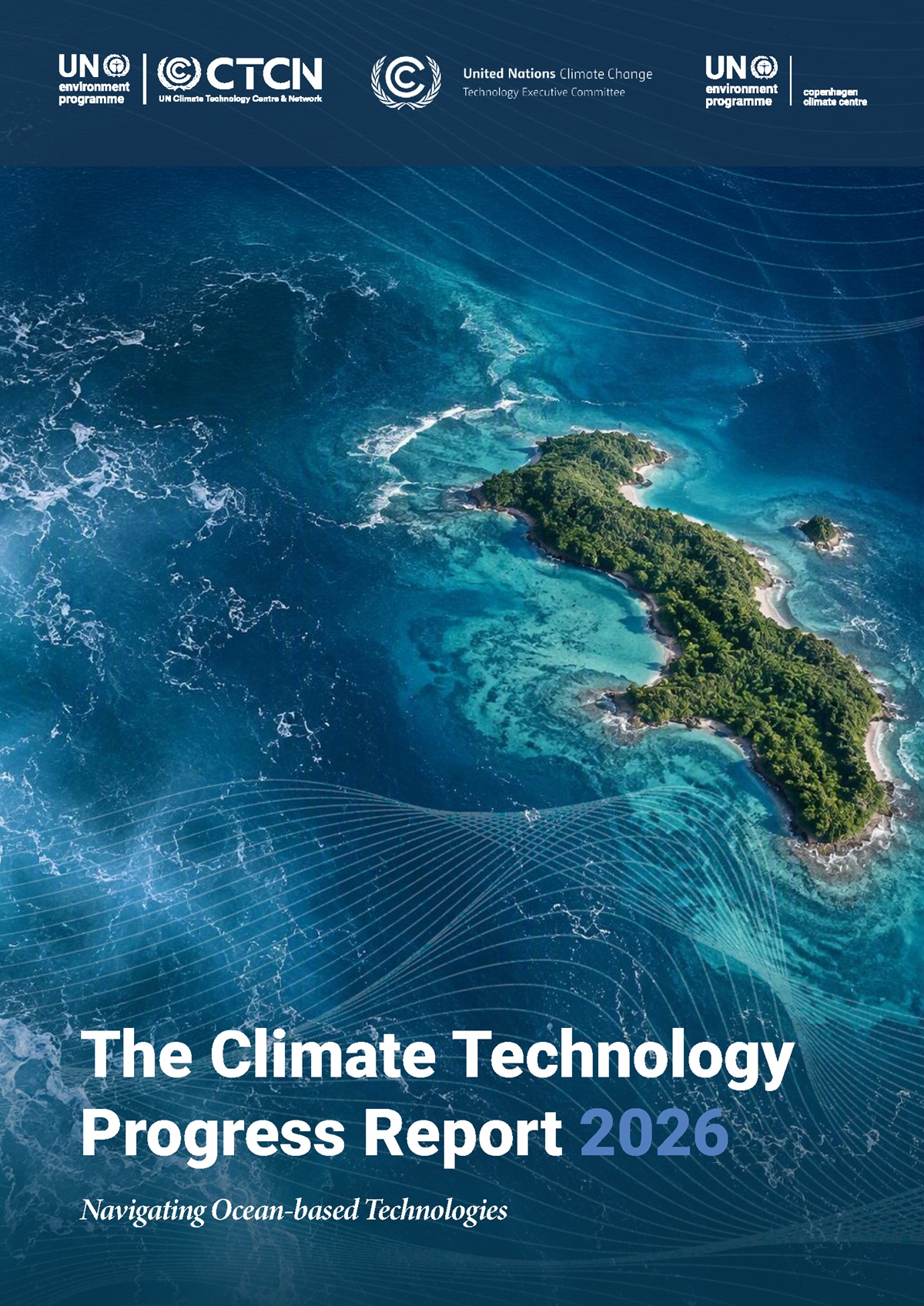
The world must strengthen its understanding of the ocean’s carbon system if it is to safeguard one of the planet’s most important climate allies, according to the 2026 Climate Technology Progress Report released today.
The report highlights Ocean Carbon Intelligence, a framework that connects ocean science, monitoring technologies, data infrastructure and analytical tools to improve understanding of ocean carbon dynamics and support evidence-based climate action.
As governments, researchers and investors increasingly look to ocean-based climate solutions to help address climate change, the report identifies sustained investment in ocean observation, data infrastructure and modelling as essential for closing critical knowledge gaps, strengthening climate decision-making and supporting the responsible development of ocean-based climate technologies.
According to the report, the ocean absorbs around 30 per cent of human-induced carbon dioxide emissions and approximately 90 per cent of excess heat generated by climate change. But rising temperatures, acidification, deoxygenation, pollution, and ecosystem degradation are disrupting the ocean processes that enable this critical climate-regulating function.
A weaker Carbon Sink
Produced by the UNEP Copenhagen Climate Centre in collaboration with the Climate Technology Centre and Network (CTCN) and the UN Framework Convention on Climate Change Technology Executive Committee (TEC), the report warns that climate change is already affecting the ocean’s ability to absorb and store carbon. Growing scientific evidence indicates that warming, acidification, and other pressures are altering the physical, chemical, and biological processes that underpin the ocean’s role as a global carbon sink.
As one of the world’s largest carbon sinks, the ocean absorbs substantial amounts of human-caused carbon dioxide. Yet warming waters and changes in ocean chemistry are placing this critical function under increasing pressure, potentially weakening the ocean’s ability to store carbon and support climate stability in the future.
“A weaker ocean carbon sink leaves more carbon dioxide in the atmosphere and makes climate goals harder and more costly to achieve. The ocean has helped buy humanity time in the fight against climate change. We cannot afford to take that role for granted,” said Martin Krause, Director, Climate Change Division at UNEP.
Protecting the Ocean’s Climate-regulating Role
While interest in ocean-based climate solutions is growing due to its climate regulatory role, major gaps in ocean observations, data systems and scientific understanding continue to limit the ability of governments and investors to assess climate risks and make informed decisions.
“The ocean has connected and sustained communities for generations, but it is now under growing pressure from climate change. As we look towards COP31, protecting the ocean’s climate-regulating role will require stronger international cooperation, sustained investment in ocean observation and monitoring systems, and greater access to finance, technology and capacity-building, particularly for developing countries and Small Island Developing States,” said the Honorable Inia Seruiratu MP, UN Climate Change Conference (COP31), Pacific Climate Envoy for the Ocean.
The report highlights both the opportunities and limitations of ocean-based climate technologies, including blue carbon ecosystem restoration and emerging marine carbon dioxide removal approaches.
It emphasizes that these technologies can complement, not replace, rapid and sustained reductions in greenhouse gas emissions and must be guided by strong science, transparency, environmental safeguards, and effective governance.
“With pressures on the ocean increasing and the need for effective climate action growing, the priority must be ensuring ocean-based climate solutions are guided by science, equity and transparency,” concluded UNEP’s Martin Krause. “Ocean innovation has significant potential, but its success will depend on strong governance, public trust and sustained investment in knowledge, capacity and international cooperation.”