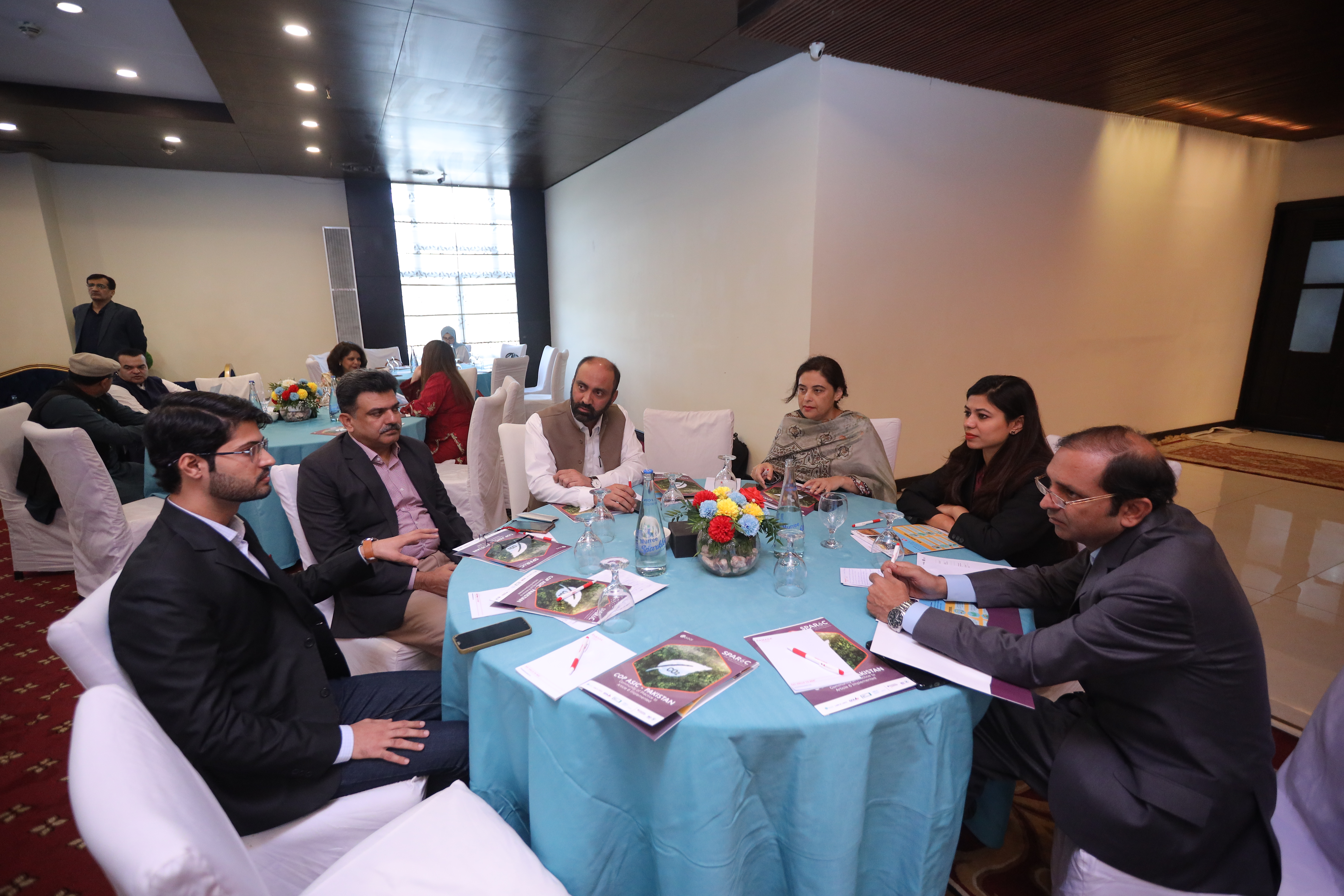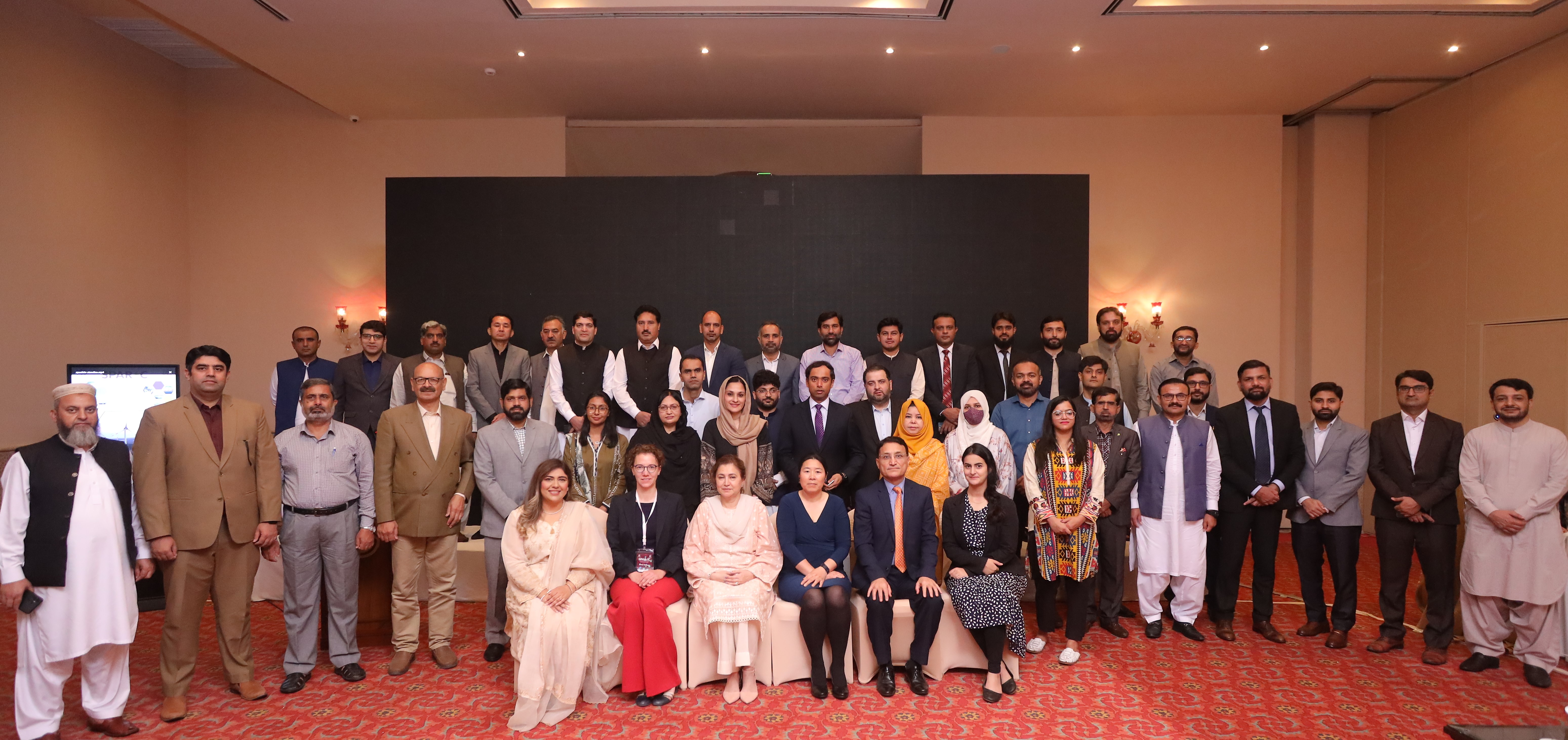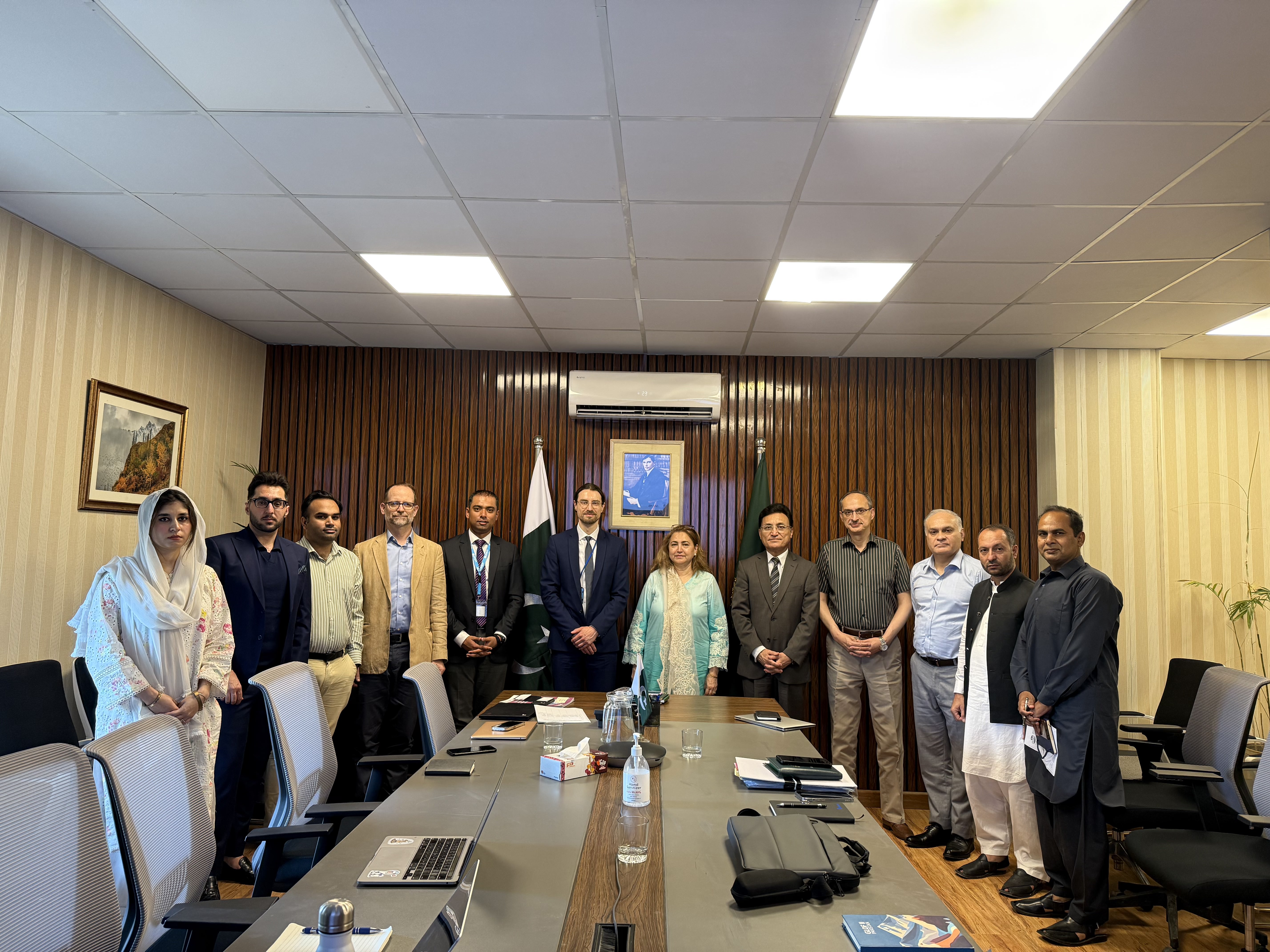
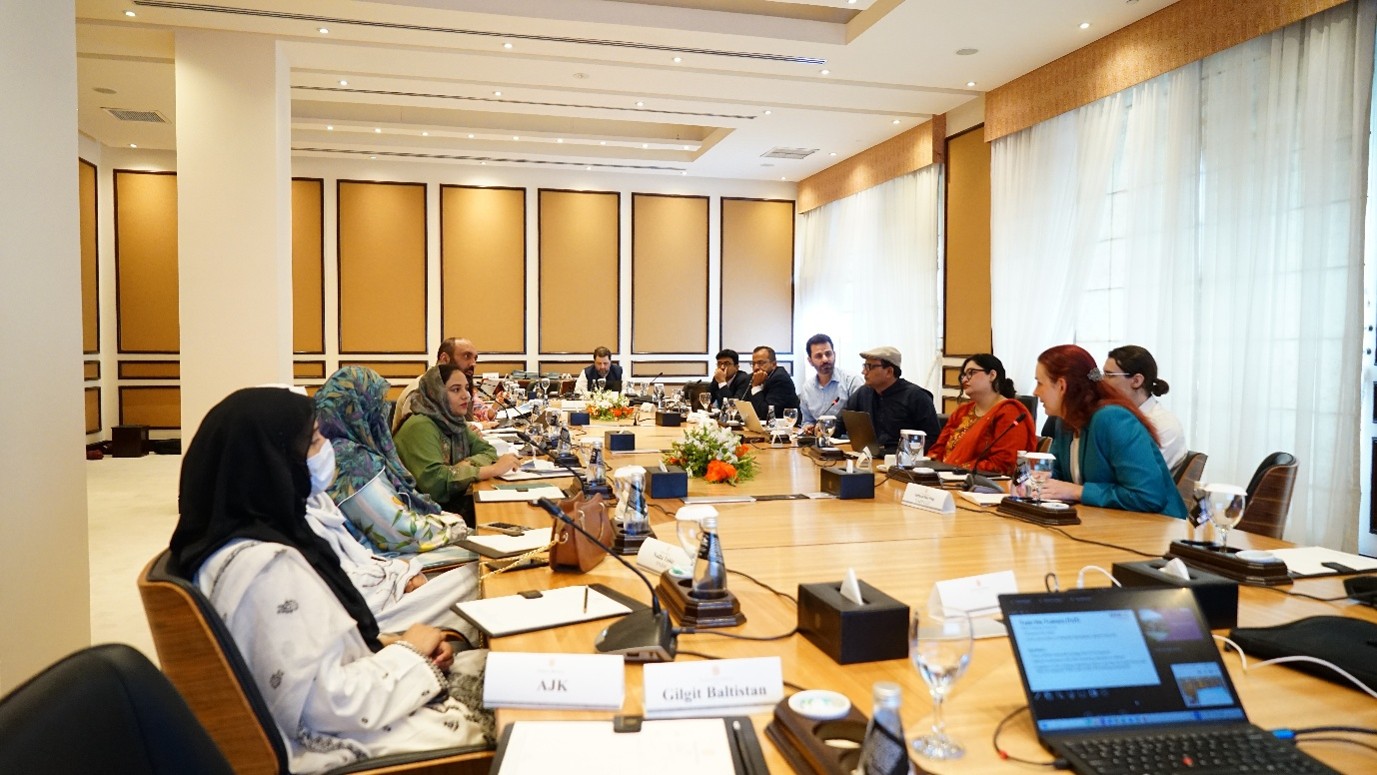
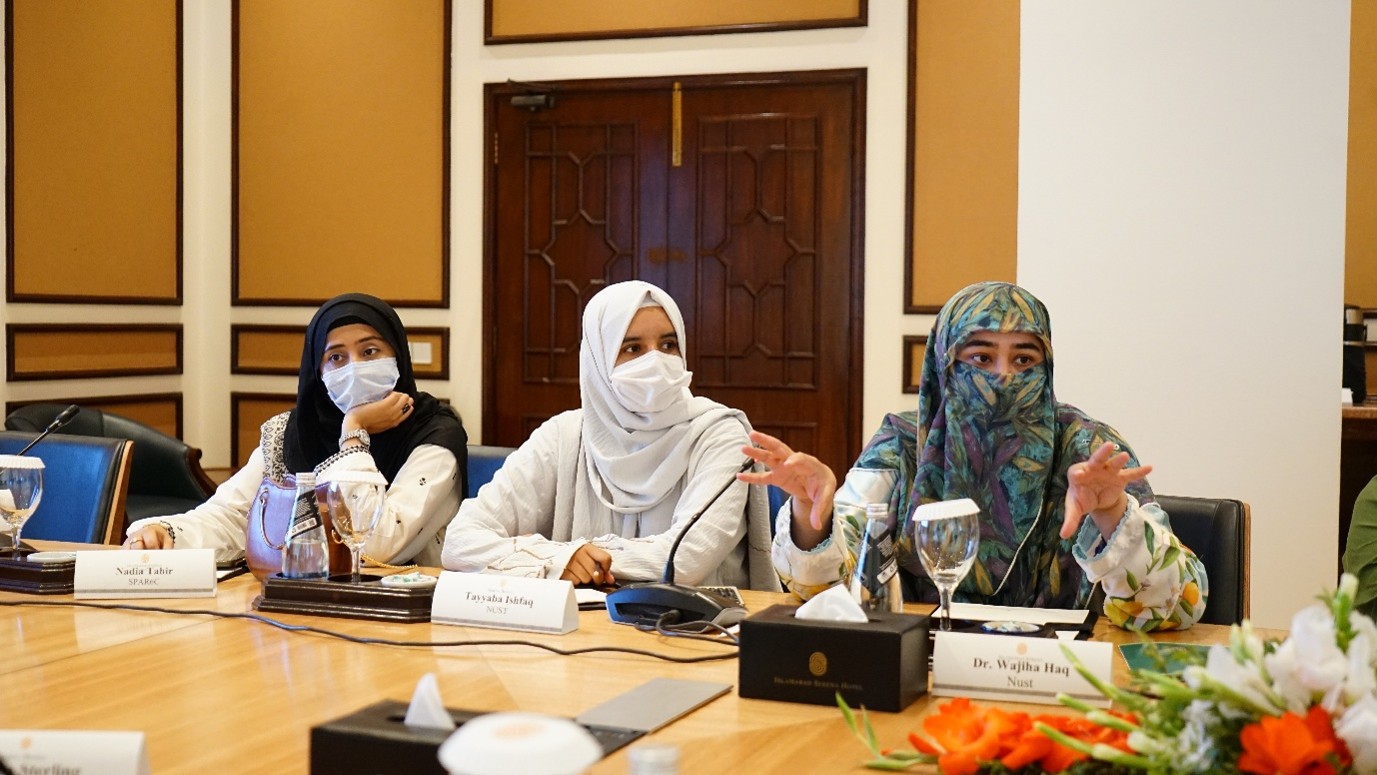
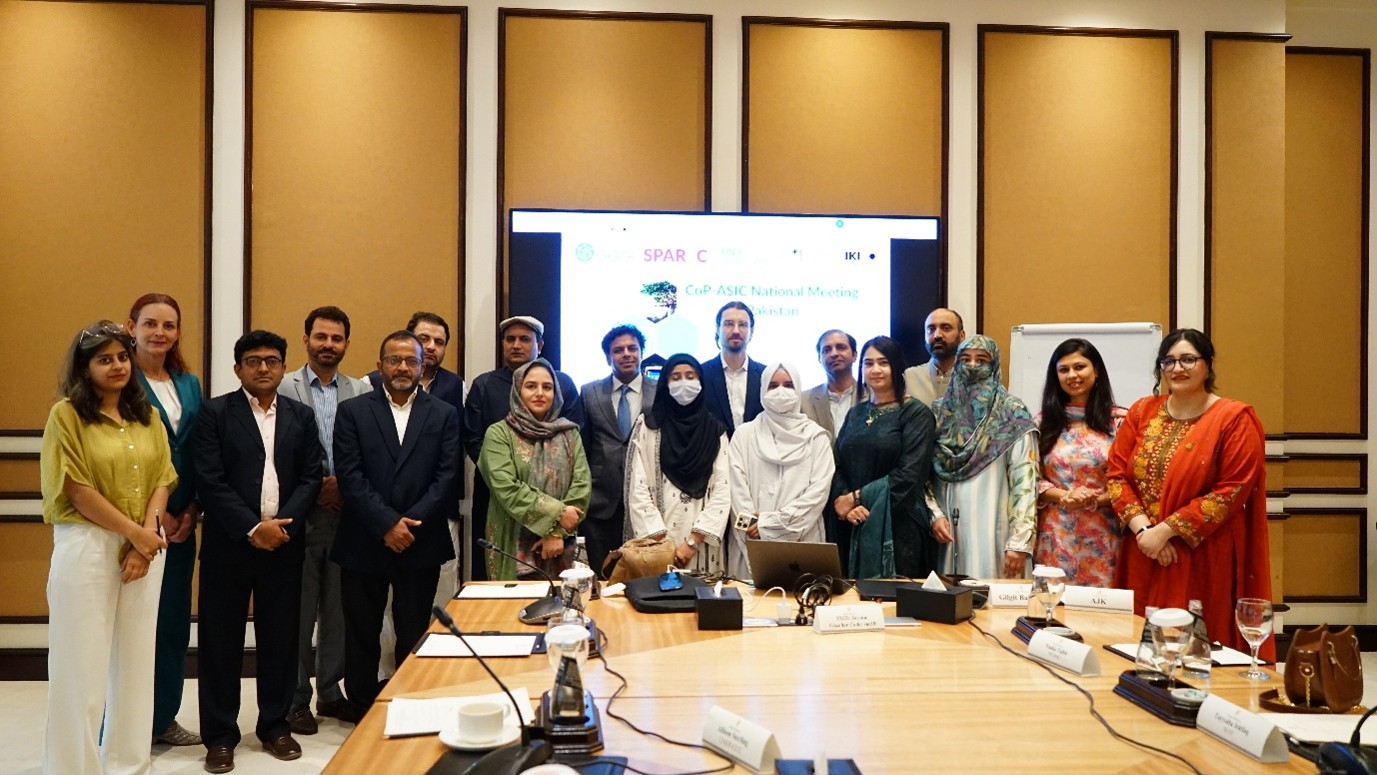
The national Community of Practice for Article 6 Countries (CoP-ASIC) network in Pakistan is taking steps towards becoming an independent platform for climate research and innovation. The transition was agreed this summer in Islamabad, at the network’s first in-person meeting since November 2024, where members discussed how to build on the network’s experience and expertise.
The network now has a new identity: the Pakistan Advanced Climate Research and Innovation Network (PACRIN). It brings together ten institutions across six provinces and regions of Pakistan and will work with the Ministry of Climate Change and Environment Coordination (MoCC&EC) to identify opportunities for research, capacity development and technical cooperation in support of national climate priorities.
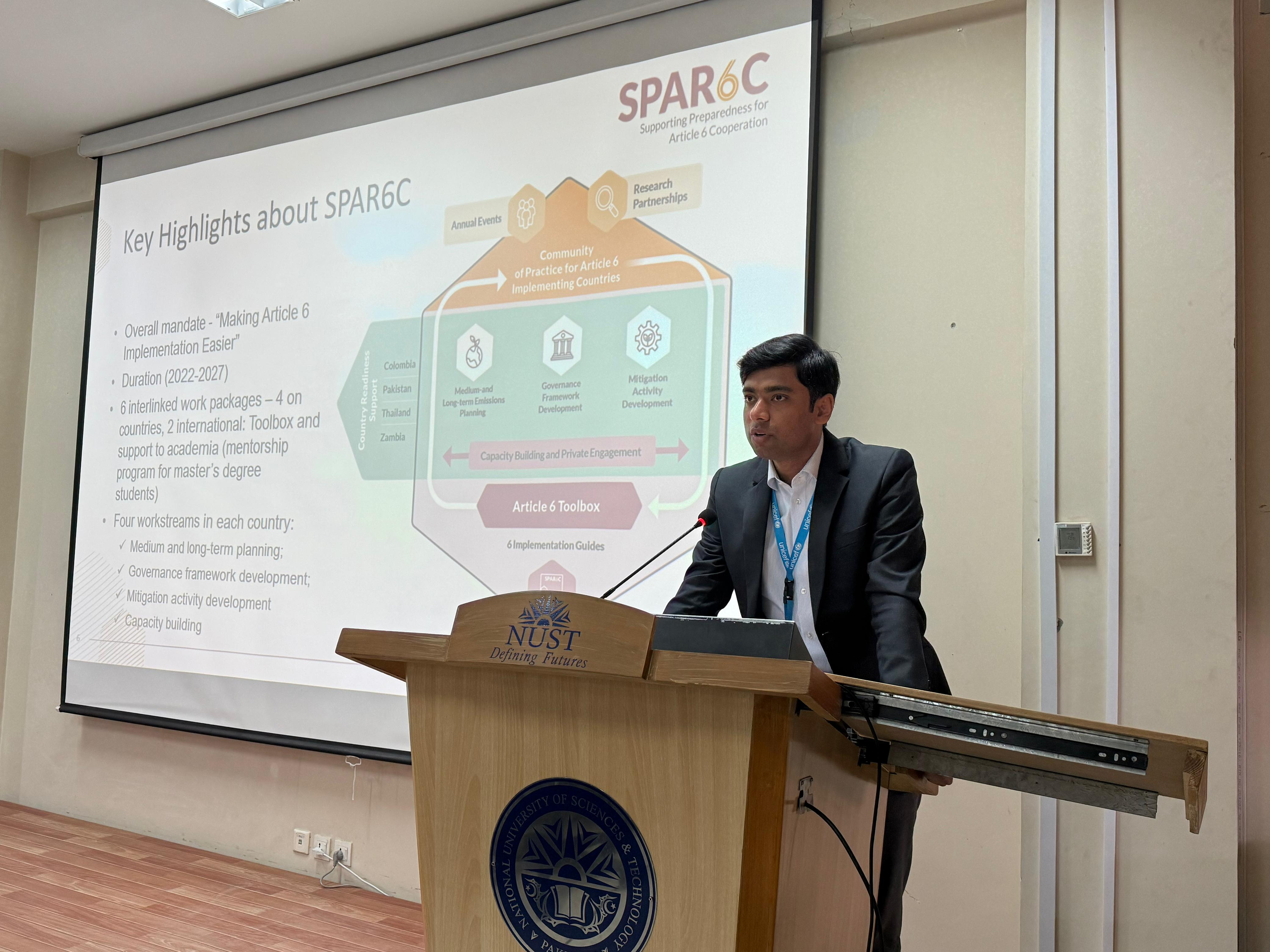
PACRIN was established in 2023 as Pakistan’s CoP-ASIC network under the Supporting Preparedness for Article 6 Cooperation (SPAR6C) programme. The programme established communities of practice in Colombia, Pakistan, Thailand and Zambia to support knowledge generation, exchange and application around Article 6 and climate action. CoP-ASIC is co-led by the Global Green Growth Initiative (GGGI) and UNEP Copenhagen Climate Centre (UNEP-CCC).
A network beyond SPAR6C
The national CoP-ASIC networks bring together academics, researchers, government representatives, climate practitioners, and graduate students and have been instrumental in supporting the SPAR6C Research Mentorship Program (RMP), a cornerstone of the CoP-ASIC. The RMP provides mentorship, training, and internship to select students in each of the partner countries, connecting their graduate research with national priority topics within Article 6 and climate action.
With the RMP approaching its conclusion in 2027, the members of what is now PACRIN have begun to focus on the role the network can play beyond the SPAR6C program. The transition had already begun in November 2024, when the network members agreed to explore the possibility of formalization and to identify priority research topics and collaboration opportunities with the MoCC&EC. The July meeting added new momentum to this transition, and the central theme of discussion was how the network’s collective expertise could be put into practice in specific initiatives.
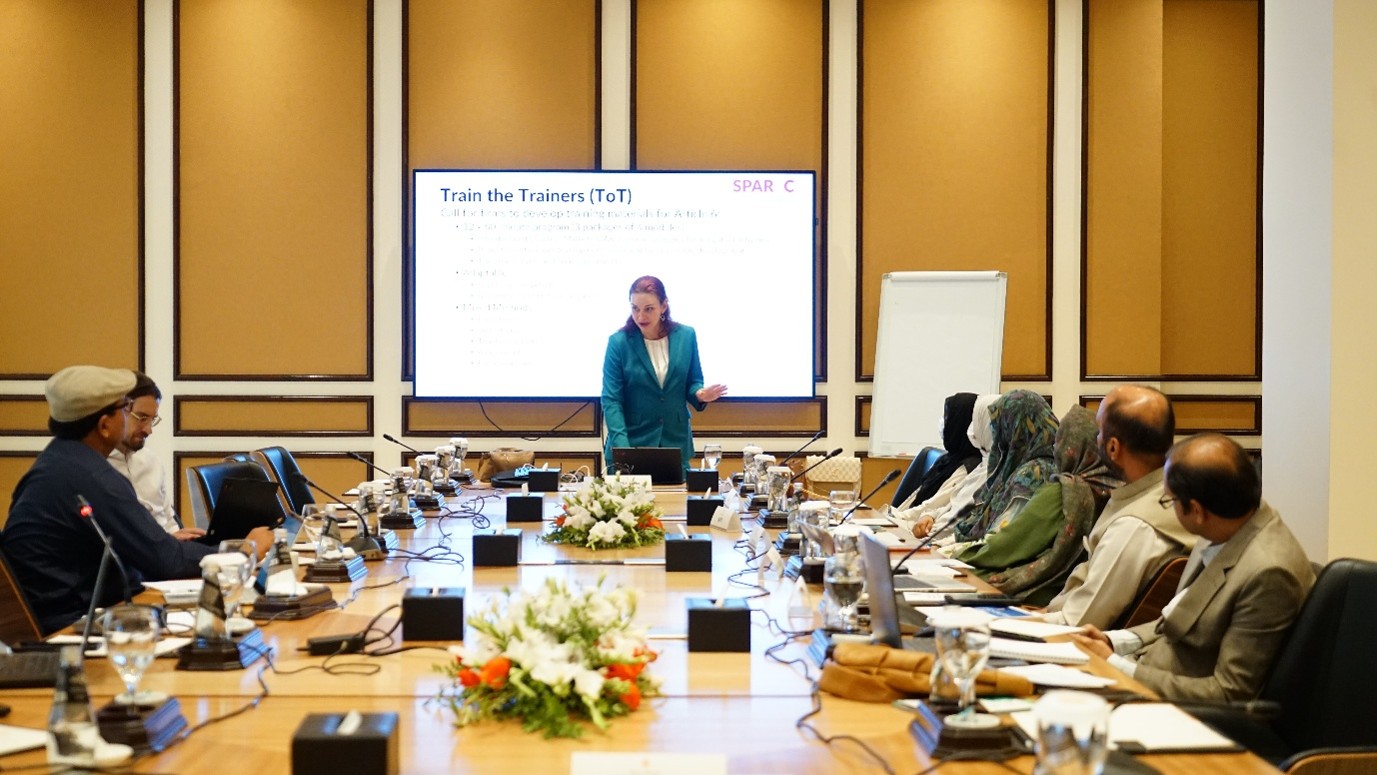
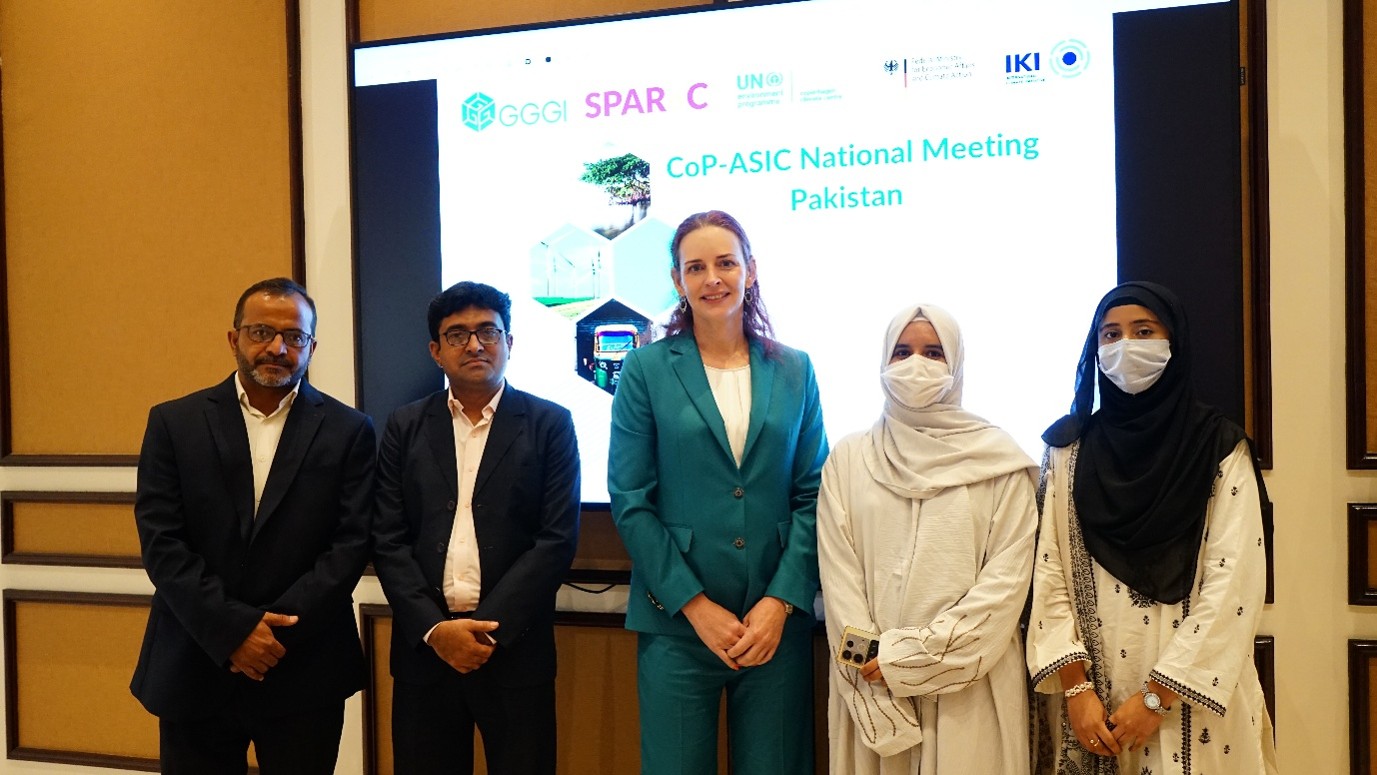
Dr. Allison Sterling, Senior Advisor at UNEP-CCC and global coordinator of the CoP-ASIC, opened the meeting with a reflection of the network’s development, tracing its evolution from an academic network established to support the RMP, towards a community of experts establishing its own priorities, governance structures, and partnerships.
Discussion moved to how the network could contribute to a “training of trainers” for Article 6 project development, an initiative requested by the MoCC&EC. The discussion considered the intended audience and the learning objectives of the program, and how it could be implemented by the institutions in the network as a pilot for connecting academic and technical expertise with national capacity-building.
“The enthusiasm at the meeting reflected what has made the Pakistan network particularly dynamic from the outset,” said Allison Sterling. “When we established national academic networks through CoP-ASIC, our hope was that they would eventually develop their own identity, priorities and relationships, and ultimately continue beyond the SPAR6C Program. What is happening in Pakistan is an encouraging step in that direction. SPAR6C will continue to support the transition, keeping in mind that network’s future will increasingly be shaped by its own members.”
From a SPAR6C National Network to PACRIN
The July meeting concluded with an agreed roadmap for formalizing the network. Over the following two months, members moved efficiently to put those decisions into practice.
A provisional leadership council was formed with the goal of developing the initial governance structure. With a Terms of Reference subsequently drafted to provide an initial framework for PACRIN’s governance and operation. The draft was reviewed and amended by the provisional leadership council and wider membership before being put to a vote and formally approved by the network in ????.
The network also selected Ms. Arooj Khan of the Balochistan University of Information Technology, Engineering and Management Sciences (BUITEMS) in Quetta to represent PACRIN at the annual CoP-ASIC event in the Republic of Korea in October 2026.
As a final step in establishing its new governance arrangements, members nominated candidates for the network’s leadership and elected Ms. Arooj Khan to serve as the Focal Point and Dr. Musarat Amin to serve as the Assistant Focal Point for the coming year.
Next steps
With its new identity, operating guidelines, membership structure, and elected leadership now in place, PACRIN is beginning to define its role as an independent national network.
The next step will be to renew its engagement with the MoCC&EC to identify areas where the network’s research and technical expertise can support national climate priorities.
Article 6 training is one key entry point. PACRIN members are currently envisioning more comprehensive approach to cooperation and support, including timely climate research and evidence-based decision making, innovation training and capacity development, and building avenues of collaboration between academic institutions domestically and internationally.
While still at the beginning of the process, PACRIN’s experience shows a promising path forward for how the national networks can evolve beyond their original function within SPAR6C and move towards independence by establishing their own governance structures and defining their roles within their countries’ wider strategies to address climate change.
Share this
Tags: carbon markets, Pakistan, SPAR6C
About SPAR6C:
The Supporting Preparedness for Article 6 Cooperation (SPAR6C) programme is a five-year initiative funded by the German Federal Government, formerly by the Federal Ministry for Economic Affairs and Climate Action (BMWK), through the International Climate Initiative (IKI).
The programme supports stakeholders in Colombia, Pakistan, Thailand, and Zambia to become prepared to engage in carbon transactions under Article 6 of the Paris Agreement.
Implementation is led by the Global Green Growth Institute, with support providers from Carbon Limits, UNEP Copenhagen Climate Centre, Kommunalkredit Public Consulting and GFA Consulting.