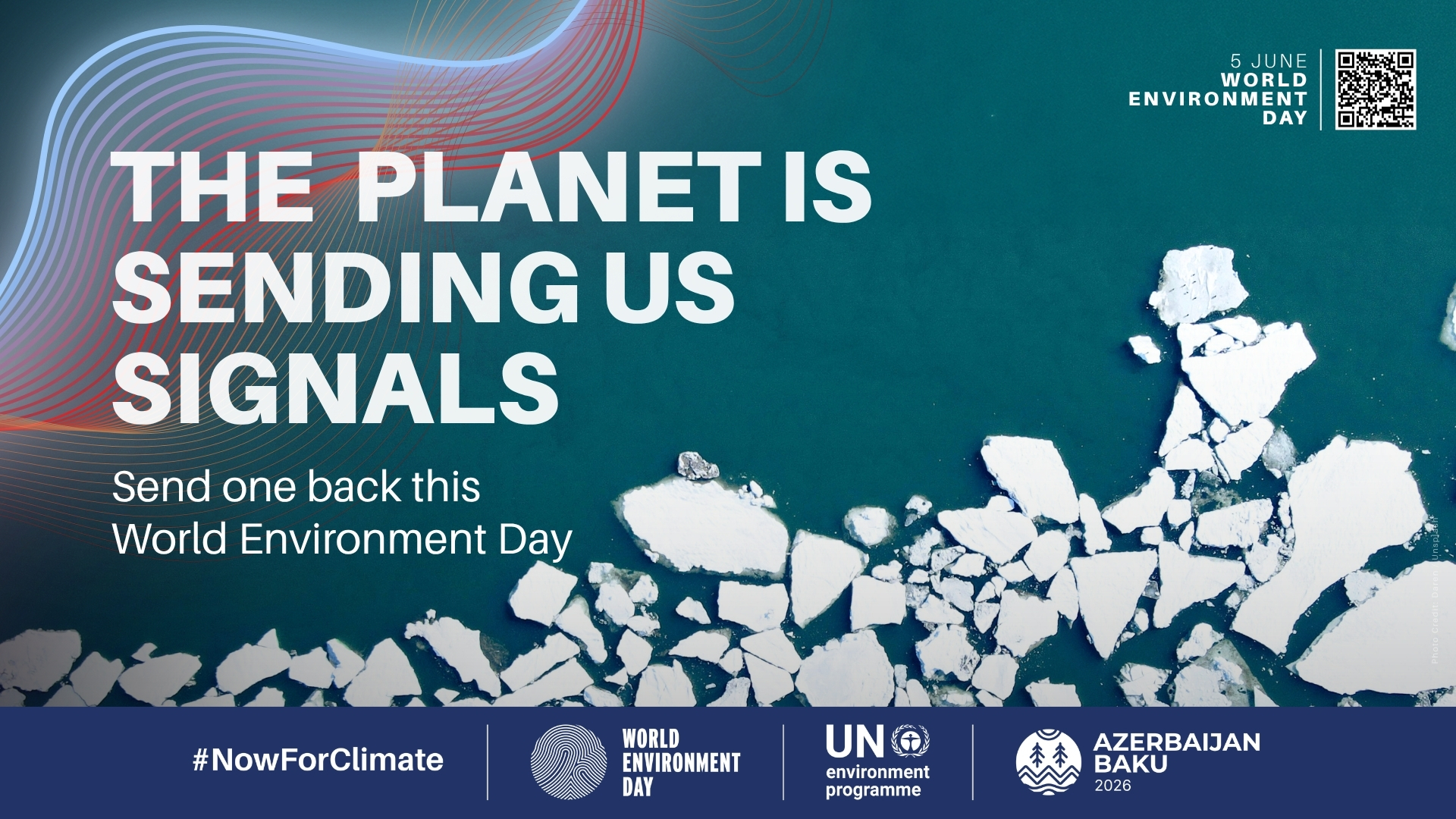
As the world marks World Environment Day 2026, new signals are emerging that the global transition to clean technologies is accelerating. While the planet continues to send stark warnings – rising seas, extreme heat and intensifying wildfires – evidence is growing that solutions are scaling faster than expected.
This year’s global celebrations are hosted by Azerbaijan, a country advancing its green transition through major renewable energy investments and new low-carbon development zones. Azerbaijan also works with UNEP and the UNEP Copenhagen Climate Centre through the Technology Needs Assessment project to identify priority climate technologies that support national development goals.
Launched ahead of World Environment Day, a new UNEP report developed with UNEP Copenhagen Climate Centre titled Cheaper. Cleaner. Unstoppable highlights a powerful and hopeful shift. Documenting how several clean technologies are approaching positive tipping points, where rapid cost declines and widespread adoption make progress self-reinforcing. The report identifies five areas where this shift is most advanced: renewable energy, electric vehicles, smarter buildings, heat pumps and cutting food waste.
These emerging tipping points signal that the global economy may be closer to large‑scale decarbonization than often assumed. As countries invest in electrification and clean technologies across sectors from transport to cooking, the potential for cascading climate benefits grows.
With the 2026–2030 period identified as a critical window for action, the report underscores the importance of embedding tipping-point strategies into national climate plans, including TNAs, NDCs and long-term strategies.
World Environment Day offers a moment to recognize these emerging signals of progress—and to accelerate the global shift toward a cleaner, more resilient future.