The Asian Development Bank (ADB) has approved a USD100 million concessional loan to expand access to affordable, climate-resilient housing in Bangladesh.
The investment builds on efforts supported through the UNEP-UNEP Copenhagen Climate Centre NDC Action Project, which worked with the Government of Bangladesh and BRAC to demonstrate how affordable housing can strengthen the resilience of vulnerable coastal communities.
The USD 100 million loan package from ADB brings together three priorities that are often addressed separately: affordable housing, financial inclusion and climate resilience.
Climate resilient housing in coastal areas
In 2023, the NDC Action Project brought together government representatives, technical experts, local communities and BRAC to explore low-cost climate-resilient housing solutions in Bangladesh’s vulnerable coastal regions. The work included field visits to Satkhira and Mongla, where the team examined existing housing interventions and engaged with communities to understand their needs during climate disasters.
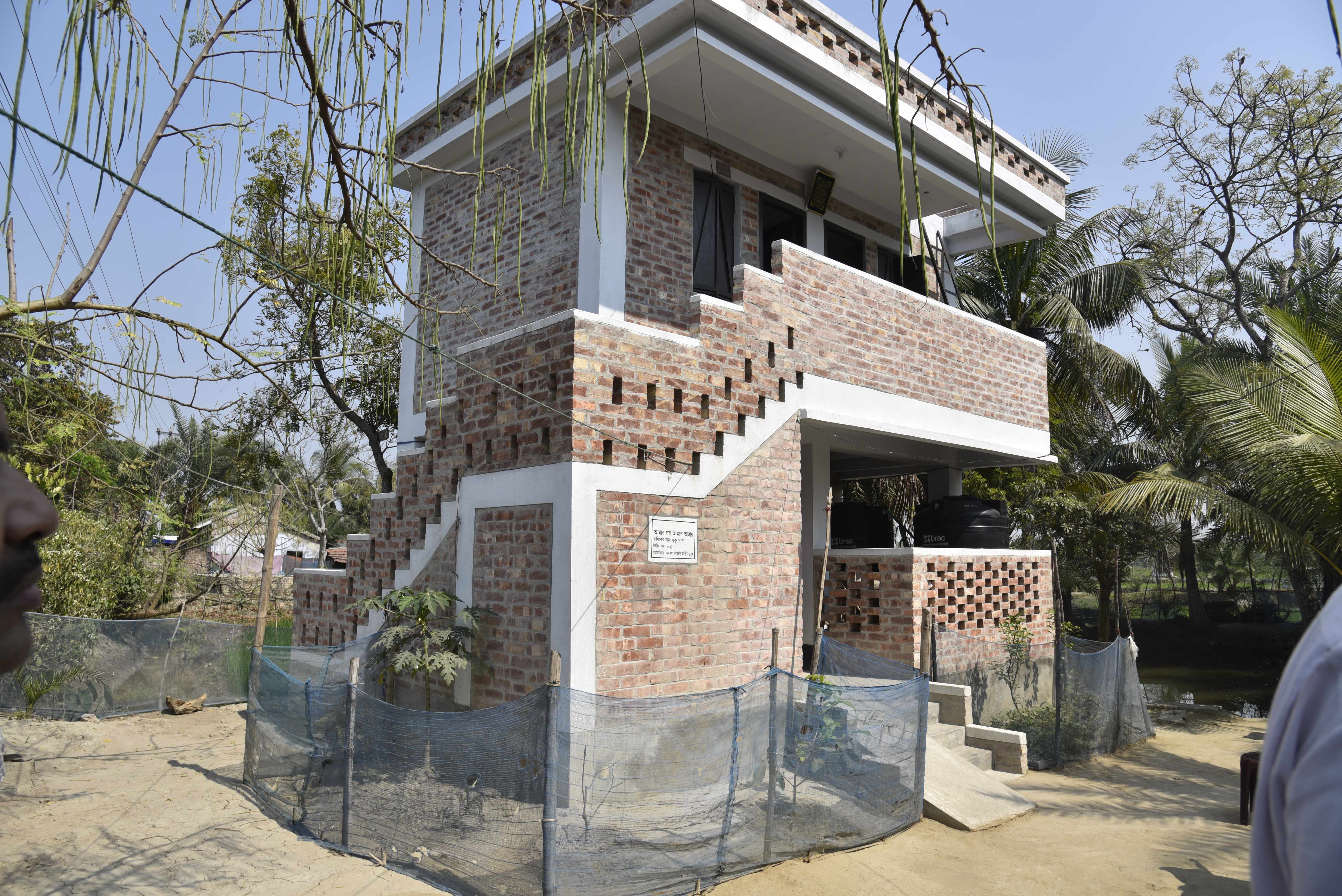
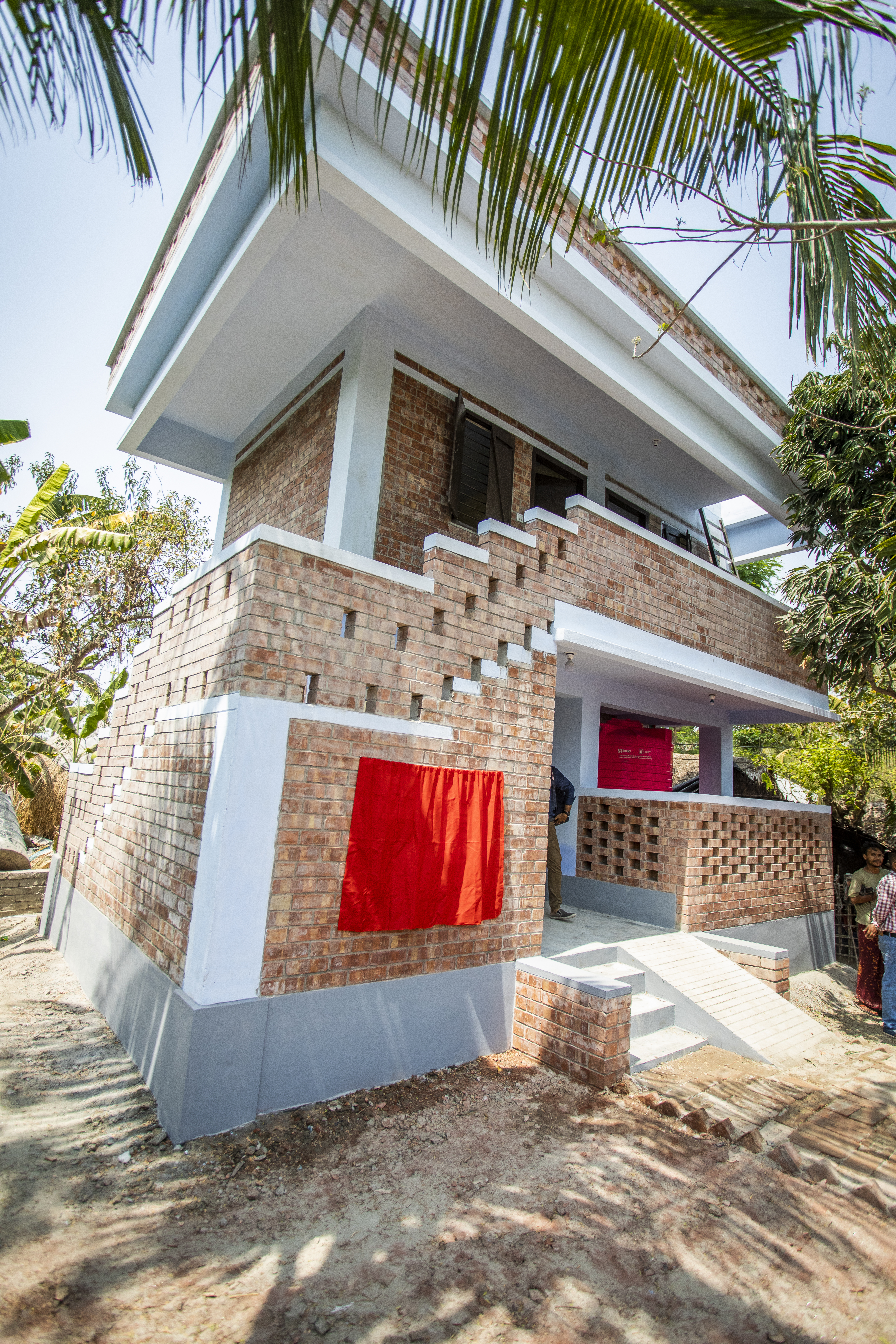
Building on BRAC’s previous experience, the project supported a pilot housing model in Mongla, designed to protect vulnerable households against cyclones and storm surges. Using sustainable, locally sourced construction materials, the houses incorporate features such as rainwater harvesting and provision for solar energy. Designed primarily as family homes, they can also serve as community shelters, accommodating up to 45 people and providing shelter for livestock.
The pilot demonstrated how climate adaptation can be integrated into affordable housing while delivering benefits beyond individual households. The design was approved and adopted by the Government of Bangladesh, and the Ministry of Environment, Forest and Climate Change committed to supporting the wider scaling up of the model across the country’s coastal regions, drawing on BRAC’s experience and the NDC Action Project.
Taking climate-resilient housing to scale
The new ADB financing represents an important step towards expanding access to affordable housing finance and strengthening climate resilience across Bangladesh.
The Inclusive Affordable Housing Finance Project will channel financing through the Palli Karma-Sahayak Foundation (PKSF) and eligible microfinance institutions to provide long-term, collateral-free loans. These will help low- and middle-income families construct new homes, extend existing houses, and carry out repairs and improvements.
The project addresses a significant shortage of climate resilient and affordable housing, as well as limited access to housing finance for households with informal incomes that are often excluded from conventional mortgage lending.
By 2031, the project is expected to provide loans to at least 40,000 households. Of these, at least 32,000 borrowers will be women, while at least 24,000 will be from areas vulnerable to climate hazards such as coastal areas.
Reducing vulnerability to climate impacts
Climate resilience is central to the financing design. Housing supported through the project will incorporate disaster- and climate-resilient construction principles, with measures to improve the ability of homes to withstand flooding, cyclones, extreme heat and other climate-related hazards.
This includes strengthening access to appropriate construction materials, technical advice on housing design and budgeting, and construction supervision and quality assessments. The project will also strengthen climate-risk screening and risk management among PKSF and participating microfinance institutions. Risk protection mechanisms, including the development of science-based parametric insurance, will help protect households and lenders against climate-related shocks.
Of the US$100 million loan, US$40 million is recognized as ADB climate adaptation financing, reflecting the project’s substantial focus on reducing vulnerability to climate impacts. An additional US$600,000 in technical assistance grants will support the project.
By integrating climate and disaster risk considerations into housing design, construction and financing, the initiative aims to ensure that investments in affordable housing also contribute to long-term resilience.
From climate commitments to investment
Bangladesh’s Nationally Determined Contribution (NDC) identifies strengthening resilience in coastal areas as a national priority. Through the NDC Action Project, UNEP and UNEP Copenhagen Climate Centre have supported the country in translating its climate commitments into practical strategies and actions that are ready for implementation and financing.
The climate-resilient housing pilot illustrates how collaboration between government, technical partners, civil society and local communities can help turn these priorities into tangible solutions. The subsequent commitment to scale up the government-approved housing model provided an important foundation for advancing climate-resilient housing in the country.
The ADB financing takes this agenda further by addressing a key barrier to wider implementation: access to affordable, long-term finance. By combining financial inclusion with climate-resilient construction and risk management, it offers an opportunity to expand safer housing options for thousands of vulnerable households.
Together, these efforts demonstrate the importance of connecting climate policy and technical assistance with the financial mechanisms needed to turn adaptation priorities into investments on the ground.
Share this
Tags: Bangladesh, buildings, climate resilience, NDC Action
ABOUT NDC ACTION
The NDC Action Project helped 10 partner countries translate their Nationally Determined Contributions (NDCs) into concrete strategies and actions, ready for implementation and financing.
With tailor-made technical assistance, the NDC Action Project fostered accelerated climate-friendly public and private investments, with a balanced focus on climate change mitigation and adaptation.
The NDC Action Project was an initiative by UNEP and the UNEP Copenhagen Climate Centre funded by Germany’s International Climate Initiative (IKI).