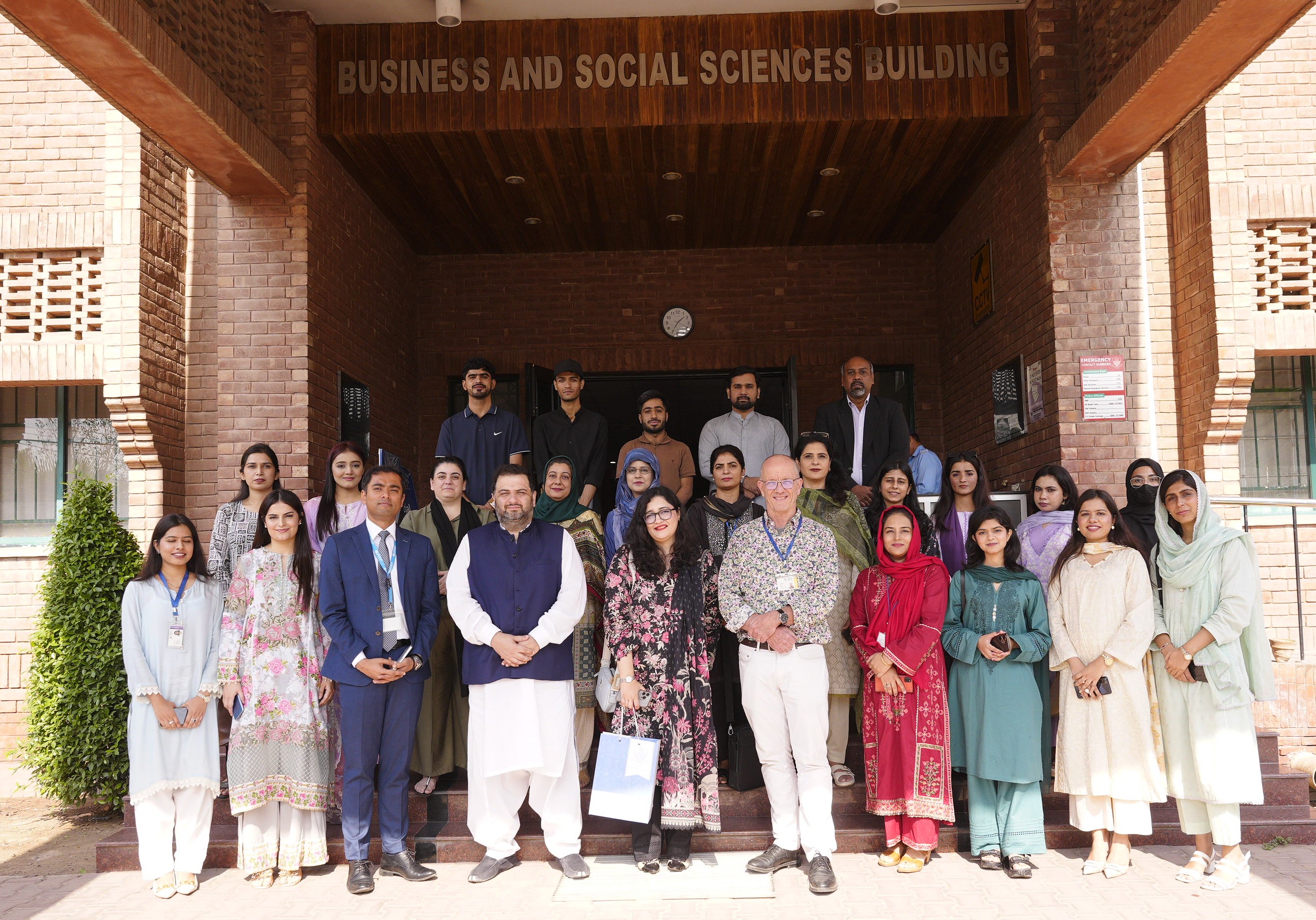
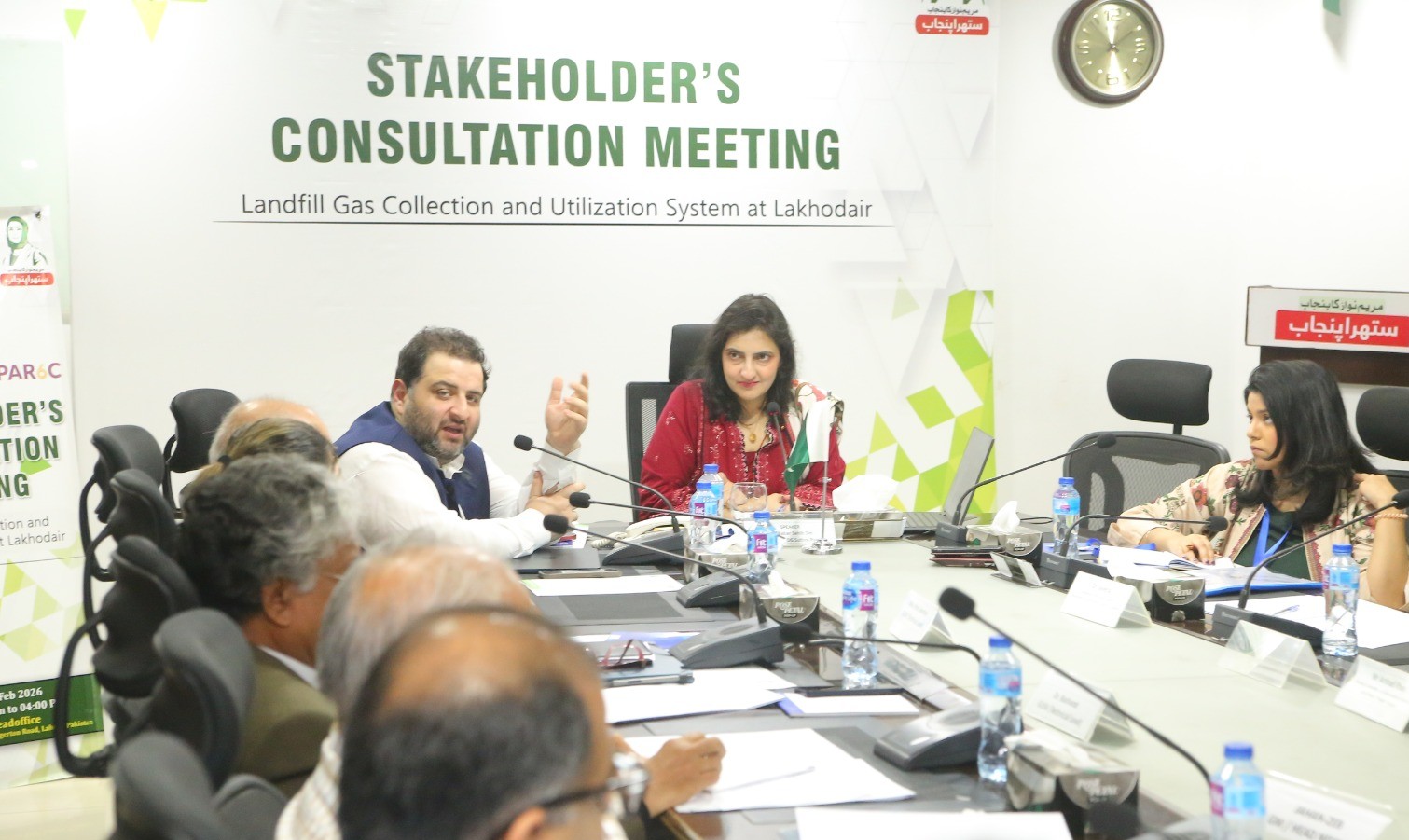
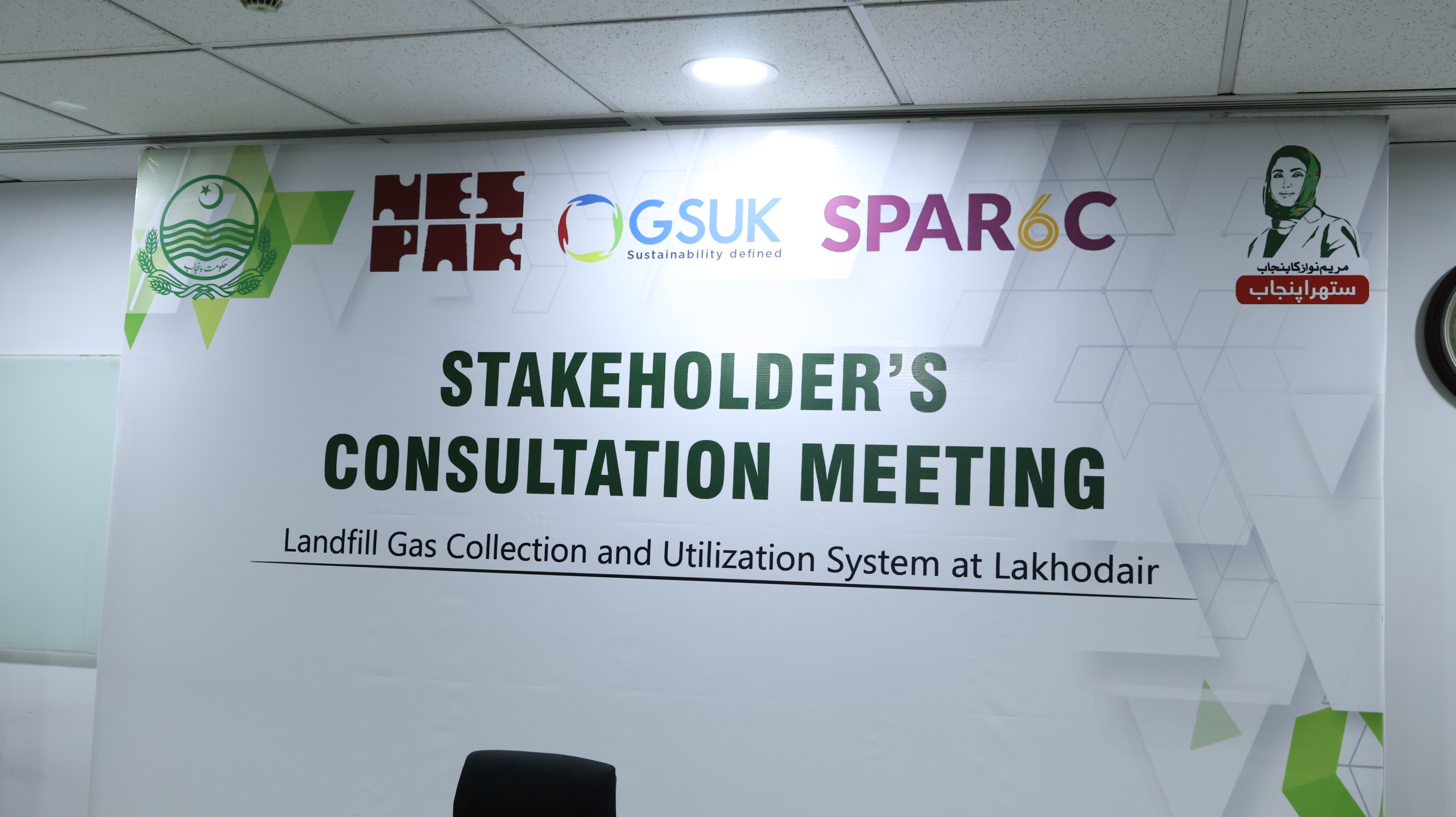
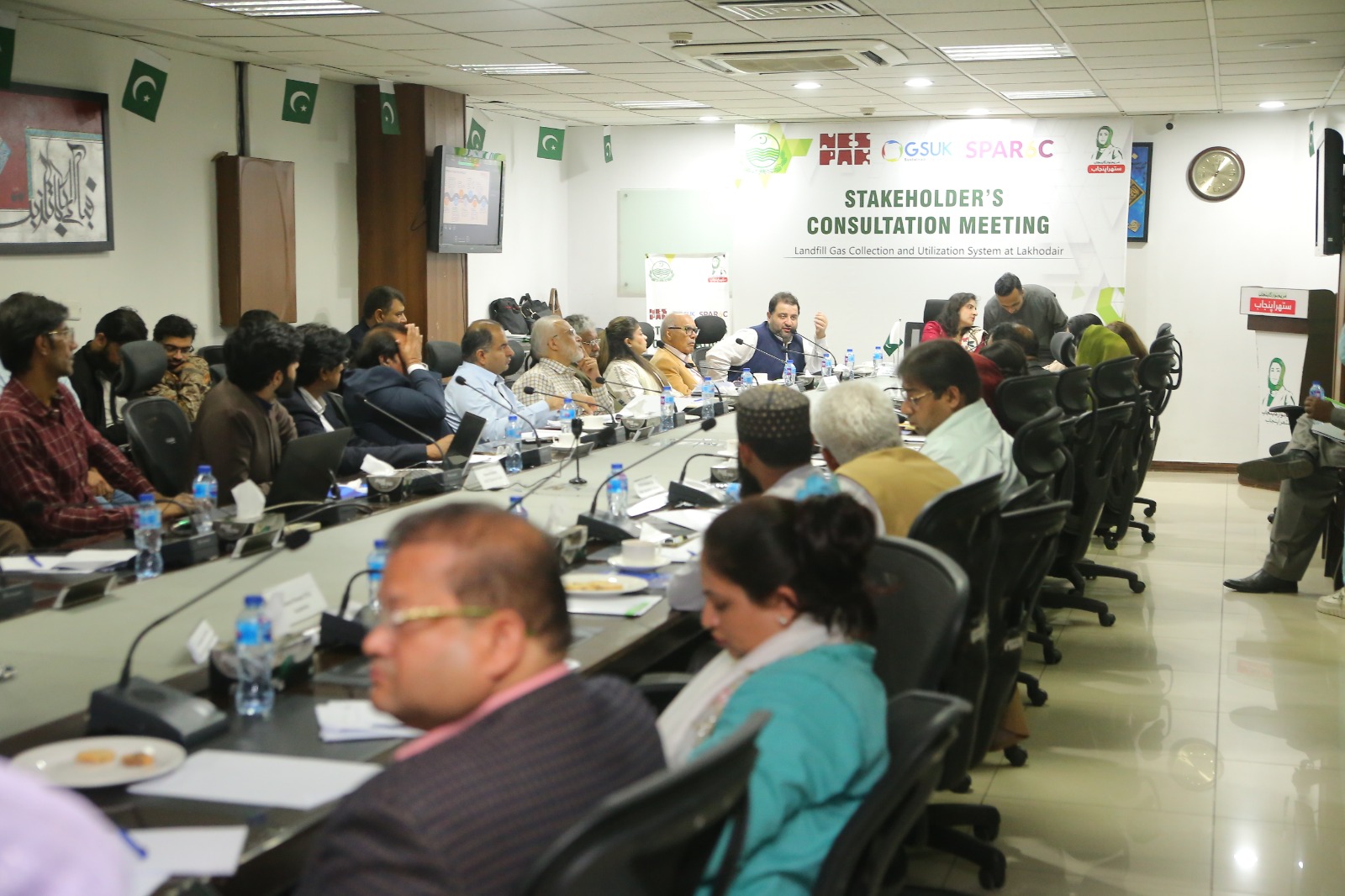
Stakeholders from government, industry and civil society gathered in Lahore in February 2026 to discuss a landmark methane capture project at the Lakhodair landfill. The consultation focused on a proposed methane gas collection project being developed under the SPAR6C (Supporting Preparedness for Article 6 Cooperation) programme.
The Lakhodair project is being supported under the Supporting Preparedness for Article 6 Cooperation (SPAR6C) programme. The core objective of SPAR6C is to help partner countries develop high-quality, high-integrity Article 6 pilot projects that can access international carbon finance. In Pakistan, SPAR6C aims to prepare up to three ambitious mitigation projects by 2027.
The consultation was held at the offices of the Lahore Waste Management Company (LWMC), who also chaired and facilitated the fruitful discussions. SPAR6C was represented by Mr. Ahsan Kamran, Senior Carbon Markets Specialist, who presented the Article 6 project cycle and host country requirements.
Technical assistance to LWMC includes feasibility assessment, engineering design, financial modeling, and preparation of an Article 6.4-compliant Mitigation Activity Design Document (MADD).
Converting methane to energy
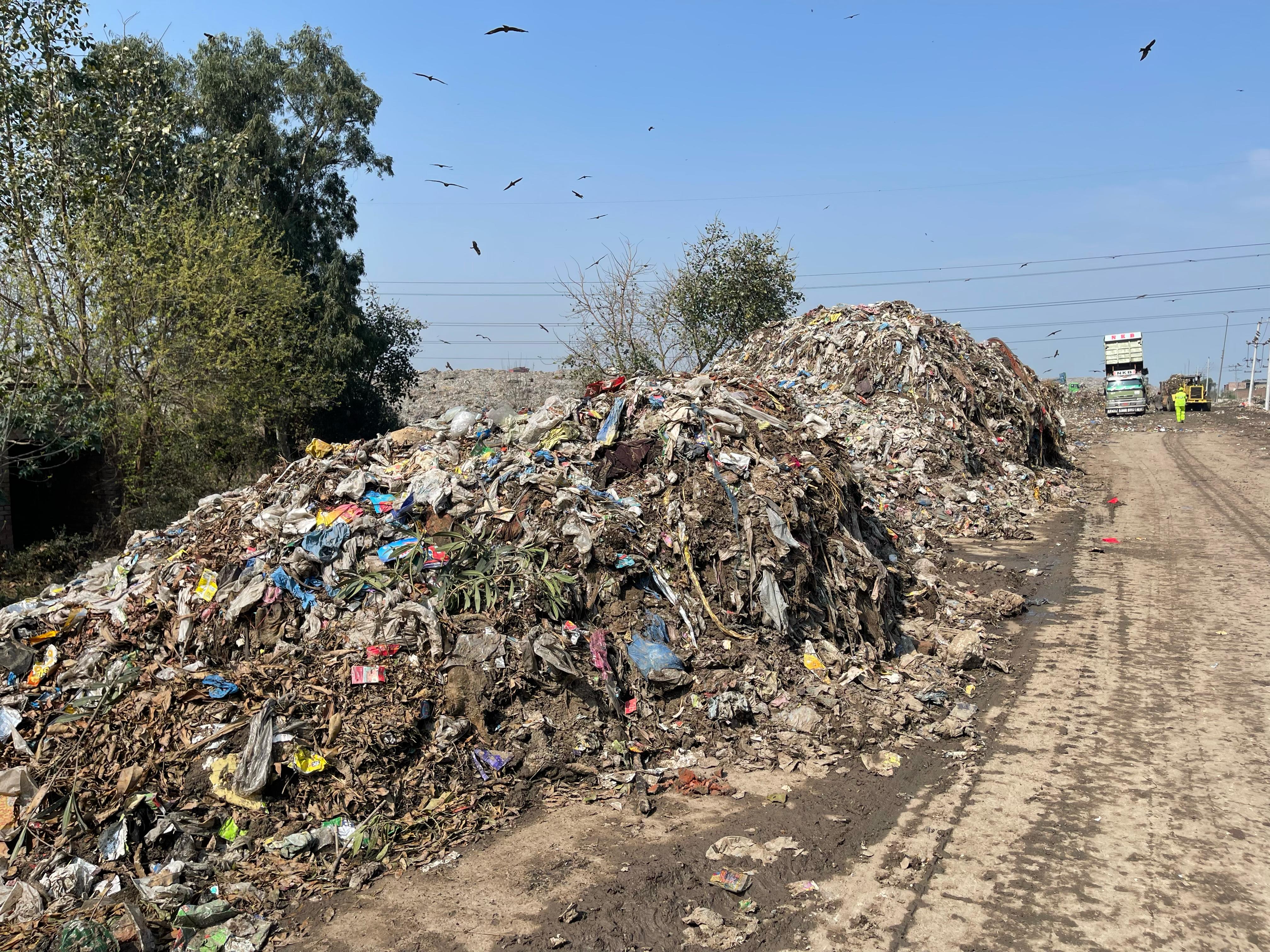
The Lakhodair landfill, operational since 2016, receives approximately 5,000–5,500 tonnes of municipal solid waste per day and has accumulated an estimated 18 million tonnes of waste. With a high biodegradable content, the site generates significant methane emissions. The proposed Landfill Gas Collection and Utilization System (LFGCUS) aims to capture methane gas and convert it into usable energy products while generating mitigation outcomes under Article 6.4 of the UNFCCC framework.
During the session, participants were briefed on the Article 6.4 project cycle, and the coming next steps, including finalization of the feasibility study and submission of the MADD for validation and registration.
A central component of the consultation was the Environmental and Social Safeguards Assessment, conducted in line with Article 6.4 Sustainable Development Tool (SD Tool). The safeguards assessment examined eight elements across environmental and social dimensions, including energy impacts, air, land and water management, ecology, human rights, labour standards, health and safety, gender equality, and land use.
Seven of the eight elements were assessed as presenting no significant risk. One environmental element related to air and water management identified manageable risks, with mitigation measures such as ambient air quality monitoring, leachate treatment systems, groundwater monitoring, and structured reporting requirements. Monitoring indicators, quality assurance procedures, and reporting responsibilities were presented to stakeholders, ensuring alignment with both national regulatory requirements and international Article 6.4 standards.
Community representation and local benefits
The consultation also outlined a proposed framework for carbon revenue utilization. Potential revenue streams include carbon credit sales, landfill gas utilization, electricity generation, and alternative fuel production. Proposed benefit-sharing measures include local infrastructure improvements, skill development programmes, health initiatives, environmental enhancements around the landfill buffer zone, and formal integration of informal waste workers.
A structured Grievance Redress Mechanism (GRM) has been established, covering both internal and external stakeholders. The GRM includes community-level representation, defined resolution timelines, and documentation procedures to ensure transparency and accountability throughout the project lifecycle.
Technical assistance for carbon market participation
The meeting concluded with an open forum, where stakeholders emphasized the importance of accessible communication, local language outreach, and continued engagement with surrounding communities.
The Lakhodair LFGCUS is among the first waste-sector projects in Pakistan being prepared under the Article 6.4 compliance mechanism with the support of SPAR6C. Through SPAR6C’s technical assistance, the project aims to demonstrate how robust safeguards, transparent governance, and sound technical design can support methane mitigation while strengthening Pakistan’s participation in international carbon markets.
The SPAR6C programme is supported by the International Climate Initiative (IKI) of the Federal Government of Germany. Within the Federal Government, the IKI is anchored in the Federal Ministry for the Environment, Climate Action, Nature Conservation and Nuclear Safety (BMUKN). It is globally led by the Global Green Growth Institute (GGGI), with implementation in Pakistan led by the UNEP Copenhagen Climate Centre and supported by GFA Consulting Group.
Share this
Tags: Article 6, carbon markets, Pakistan, SPAR6C
The Supporting Preparedness for Article 6 Cooperation (SPAR6C) programme is a five-year initiative funded by the German Federal Government, formerly by the Federal Ministry for Economic Affairs and Climate Action (BMWK), through the International Climate Initiative (IKI).
The programme supports stakeholders in Colombia, Pakistan, Thailand, and Zambia to become prepared to engage in carbon transactions under Article 6 of the Paris Agreement.
Implementation is led by the Global Green Growth Institute, with support providers from Carbon Limits, UNEP Copenhagen Climate Centre, Kommunalkredit Public Consulting and GFA Consulting.