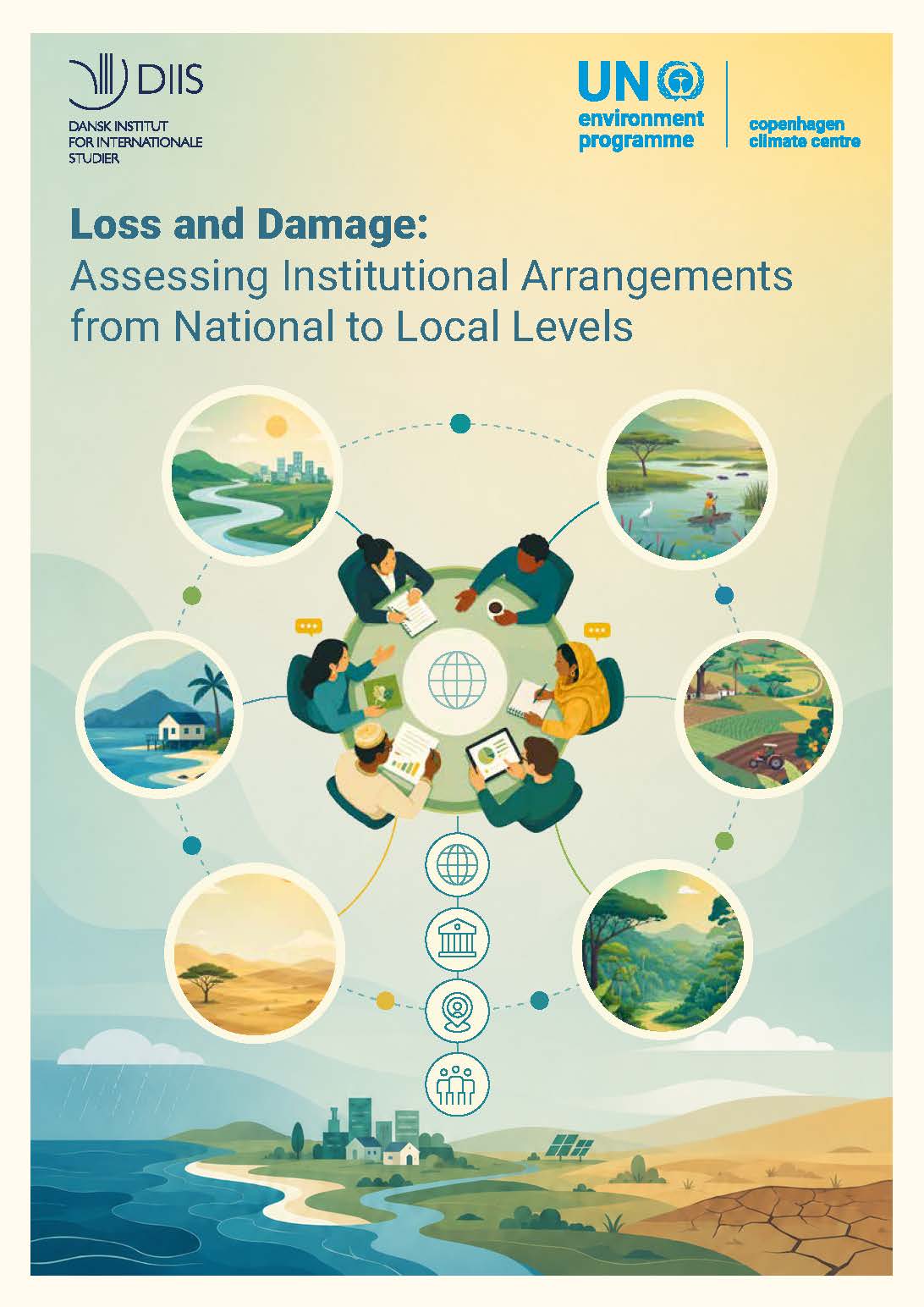
This study investigates how six nations- India, Mauritius, Somalia, Vanuatu, Viet Nam, and Zambia, structure their governance arrangements to manage climate-related loss and damage (L&D), examining operations across national, sub-national and local scales.
The research combines three methodologies: mapping of institutional actors and mandates, analysis of policy and legal documents, and structured consultations with state and non-state representatives.
The assessment examines four dimensions:
- Institutional arrangements, coordination and
participatory processes - Data sharing, reporting and technical systems
- Operational capacity
- Learning and scaling processes
These insights are aimed to guide governance reforms and strengthen countries’ ability to work with emerging international L&D instruments.
Climate-induced losses and damages are already reshaping development pathways in all six case countries, with disproportionate burdens falling on populations facing socioeconomic marginalization and sectors highly dependent on climate-sensitive resources.
Although each country has advanced disaster risk management and climate adaptation
programming, their institutional architectures have yet to fully accommodate the breadth, magnitude and distributional patterns of L&D impacts.
The study presents the following core findings:
- Loss and damage has not yet been widely developed as a stand-alone policy domain in most contexts.
- Institutional fragmentation weakens strategic coherence.
- Information systems emphasize economic impacts and sudden-onset hazards.
- Participatory structures remain underdeveloped despite procedural provisions.
- Operational capacity is weakest at decentralized levels.
- Effective local practices remain confined to pilot initiatives.
Based on these findings, the study recommends four strategic directions for strengthening L&D governance:
- Formalize institutional leadership and coordination structures.
- Build comprehensive data and reporting architectures for L&D.
- Establish permanent participatory governance mechanisms.
- Expand decentralized capacities and knowledge management.
This publication was developed by the UNEP Copenhagen Climate Centre and the Danish Institute for International Studies (DIIS). UNEP Copenhagen Climate Centre was supported by funding provided by the Ministry of Foreign Affairs of Denmark (Danida).
Download Download Policy Brief Source| Published year: | 2026 |
|---|---|
| File: | Download Download |
| Link: | https://unepccc.org/wp-content/uploads/2026/10/loss-and-damage-assessing-institutional-arrangements-from-national-to-local-levels.pdf |
| Publisher: | UNEP Copenhagen Climate Centre and Danish Institute for International Studies (DIIS) |